


03/04/2024
Share This Story, Choose Your Platform!

What Skills Do Tech Recruiters Look For?
Tech recruiters play a pivotal role in the modern landscape of recruitment, specifically within the technology sector. Their primary responsibility is to identify, attract, and hire top talent with the necessary skills and expertise to drive innovation and success within tech companies. These professionals serve as strategic partners to hiring managers and HR departments, working diligently to source candidates who not only meet the technical requirements of a role but also align with the company’s culture and values.
The Quest for Talent
In today’s hyper-competitive job market, finding candidates with the right skills has become increasingly challenging yet crucial for companies looking to stay ahead of the curve. The rapid advancements in technology have created a demand for specialized skill sets that are often in short supply, making the role of tech recruiters even more critical. Hiring the wrong candidate can lead to costly setbacks and disruptions in project timelines, which is why many companies use tech recruiters to help make the hiring process easier.
Top Skills Tech Recruiters Look For
Technical Proficiency in Relevant Programming Languages and Tools
Tech recruiters prioritize candidates who possess a deep understanding of relevant programming languages and tools essential for the role they are hiring for. Proficiency in the following areas is highly valued.
-
- Java – Java is an object-oriented programming language featuring platform independence, allowing applications to run on diverse systems using the Java Virtual Machine (JVM). Widely employed in web and enterprise development, mobile apps (particularly for Android), and large-scale distributed systems, Java’s portability, readability, and community support make it a popular choice for creating robust and scalable software solutions.
- Python – Python, a high-level programming language created by Guido van Rossum in 1991, is widely recognized for its readability and simplicity. Python has become a cornerstone in various domains such as web development, data science, artificial intelligence, automation, and scripting, supporting multiple programming paradigms, including procedural, object-oriented, and functional programming. Its popularity stems from its concise syntax and an extensive standard library, enabling developers to write efficient and expressive code with fewer lines.
- Frameworks like React and Angular – React and Angular are JavaScript frameworks for building web applications. React, developed by Facebook, is a declarative library for creating reusable UI components with efficient updates. It’s often used for single-page applications. Angular, developed by Google, is a full MVC framework using TypeScript, offering tools like two-way data binding and dependency injection. React is more focused on UI components, while Angular is a comprehensive solution for building large-scale applications with a structured approach.
- Experience working with databases like MySQL or MongoDB – MySQL is a relational database ideal for structured data in applications like content management systems. It uses tables with predefined schemas to ensure data integrity through relationships. MongoDB, a NoSQL database, stores flexible, JSON-like data, making it suitable for unstructured or semi-structured data in dynamic applications like social media platforms. It excels in horizontal scaling, large datasets, and fast read and write operations.
- Git – Git is a distributed version control system for tracking changes in source code during software development. It enables collaboration among multiple developers, facilitates seamless merging of code changes, and maintains a complete project history. Git’s decentralized structure allows offline work and efficient synchronization with a central repository, making it an indispensable tool for version control in software development.
- JIRA – JIRA, developed by Atlassian, is a widely used project management and issue-tracking tool designed to enhance collaboration and streamline workflows within teams. Primarily used by software development teams, JIRA facilitates the tracking of tasks, bugs, and new features throughout the entire development lifecycle. It offers a centralized platform for project planning, task assignment, progress monitoring, and reporting. With customizable workflows and extensive integration capabilities, JIRA enables teams to adapt the tool to their specific needs, fostering efficient communication and coordination among team members. Its popularity extends beyond software development, finding utility in various industries for managing projects and tracking issues across different domains.
- Jenkins – Jenkins is an open-source automation server widely used in software development to streamline and automate various aspects of the continuous integration and continuous delivery (CI/CD) pipeline. It facilitates the building, testing, and deployment of software by automating tasks such as code compilation, testing, and deployment processes. Jenkins enables developers to integrate code changes frequently, detect errors early in the development cycle, and ensure the reliable and efficient delivery of software. Its extensibility through plugins allows integration with various tools and technologies, making it a versatile choice for managing and automating complex workflows in the software development lifecycle.
Recruiters often look for individuals who not only have theoretical knowledge but can demonstrate practical application through projects or previous work experience.
Problem-Solving and Critical Thinking Abilities
In the fast-paced world of technology, problem-solving skills are paramount. Tech recruiters value candidates who can approach complex issues logically, analyze problems effectively, and devise innovative solutions efficiently. Demonstrating a track record of overcoming challenges in previous roles or academic projects showcases a candidate’s ability to think critically under pressure.
Candidates who excel in algorithmic problem-solving exercises or have participated in coding competitions demonstrate their aptitude for tackling intricate technical issues. Strong critical thinking abilities enable tech professionals to troubleshoot software bugs, optimize code efficiency, and contribute positively to team collaboration by offering insightful solutions to complex technical problems.
Experience with Specific Technologies or Frameworks
Tech recruiters place a high value on candidates who possess hands-on experience with specific technologies or frameworks. For instance, proficiency in popular front-end frameworks like React or Angular can significantly enhance a candidate’s desirability.
Similarly, expertise in cloud computing platforms such as AWS (Amazon Web Services) is often sought after by tech companies looking to scale their operations efficiently and securely. Demonstrating practical experience with these technologies through past projects, collaborations, or even certifications can set a candidate apart from the competition.
Tech recruiters understand that familiarity with these tools can streamline the onboarding process and contribute to a more productive and innovative work environment. Therefore, highlighting one’s proficiency in specific technologies or frameworks is crucial for attracting the attention of discerning tech recruiters.
Understanding of Agile Methodologies and Project Management Skills
In addition to technical acumen, tech recruiters also value candidates who exhibit a solid understanding of agile methodologies and possess strong project management skills. Agile practices have become integral to modern software development processes due to their emphasis on collaboration, adaptability, and incremental delivery of high-quality products.
Candidates well-versed in agile principles are often seen as valuable assets who can contribute effectively to dynamic team environments. Moreover, possessing project management skills goes beyond simply delivering tasks on time; it involves coordinating resources, setting priorities, and ensuring alignment with overarching business goals.
Tech recruiters recognize the importance of candidates who can navigate complex projects efficiently while maintaining clear communication channels within their teams. By showcasing proficiency in agile methodologies and project management skills, job seekers can demonstrate their capacity for leadership and successful project execution to discerning tech recruiters.
Open-source Contributions or Personal Projects Showcasing Expertise
Tech recruiters highly value candidates who actively contribute to open-source projects or have a portfolio of personal projects demonstrating their skills and passion for technology. Open-source contributions, such as code repositories on platforms like GitHub, not only showcase a candidate’s coding abilities but also their collaboration skills within the tech community.
Recruiters look for candidates who go beyond their day-to-day responsibilities and show initiative by engaging in projects that contribute to the greater tech ecosystem. Personal projects, whether it’s building a mobile app, creating a website, or developing a new software tool, provide recruiters with tangible evidence of a candidate’s creativity and problem-solving capabilities outside of a structured work environment.
Certifications or Continuous Learning Initiatives
In the fast-paced world of technology, staying up-to-date with the latest trends and advancements is crucial. Tech recruiters recognize the importance of continuous learning and professional development in potential candidates. Obtaining relevant certifications in programming languages, cloud computing platforms, cybersecurity, or other specialized areas not only demonstrates expertise but also shows dedication to honing one’s skills.
Additionally, participation in online courses, workshops, webinars, and tech conferences signals to recruiters that a candidate is proactive about expanding their knowledge base and keeping abreast of industry changes. Candidates who invest time and effort into continuous learning initiatives are often seen as valuable assets to tech teams as they bring fresh insights and innovative solutions to the table.
Conclusion: What Skills Do Tech Recruiters Look For?
In conclusion, the ever-evolving landscape of technology demands a set of skills that go beyond theoretical knowledge. Tech recruiters are on the lookout for candidates who not only possess technical proficiency in programming languages, frameworks, and tools but also demonstrate problem-solving abilities, hands-on experience, project management skills, and a commitment to continuous learning.
To stand out in this competitive field and meet the expectations of tech recruiters, it’s essential to invest in your professional development. Max Technical Training offers comprehensive courses that cover a wide range of in-demand skills, from programming languages like Java and Python to frameworks like React and Angular, and tools like Git, JIRA, and Jenkins. These courses not only provide theoretical knowledge but also focus on practical application, ensuring that you can showcase your skills effectively to potential employers.
By enrolling in Max Technical Training courses, you not only gain the technical expertise employers seek but also set yourself apart with hands-on experience, problem-solving capabilities, and a commitment to continuous learning. Equip yourself with the skills that tech recruiters value, and take the first step towards a successful and fulfilling career in the ever-evolving world of technology. Don’t just meet expectations – exceed them. Enroll in Max Technical Training today and elevate your tech skills to new heights. Your future in the tech industry awaits!
Read More Articles From MaxTrain Technical Training

Selecting the right AI instructors
Resource Article · AI Training Selecting the right AI instructors How MAX Technical Training vets its instructors — and why that process changes everything about your learning experience. There has never been more AI [...]
New ITIL5 Explained for Certified Professionals
The new ITIL builds on everything professionals already value in ITIL, evolving the framework to reflect today’s digital, product-centric, and AI-enabled reality. Existing knowledge, experience, and certifications remain fully relevant as part of this evolution. [...]

Microsoft Copilot Prompt Guide
Unlocking Productivity with Copilot: A Prompt Library for Microsoft Tools As organizations begin to explore the transformative potential of Microsoft Copilot, one thing becomes clear: the quality of your prompts directly impacts the value you [...]

A Practical Guide to Implementing Microsoft Copilot in Your Organization
A Practical Guide to Implementing Microsoft Copilot in Your Organization Date: October 14, 2025 Author: Dustin Miller Microsoft Copilot is transforming how organizations work—but unlocking its full potential requires more than just turning it on. [...]

The Power of Copilot | Boost Productivity with AI
The Power of Copilot Date: October 8, 2025 Author: Dustin Miller 1. What Can Copilot Actually Do for You? Summary: Many professionals and organizations hear about AI tools like Copilot but aren't sure what they [...]
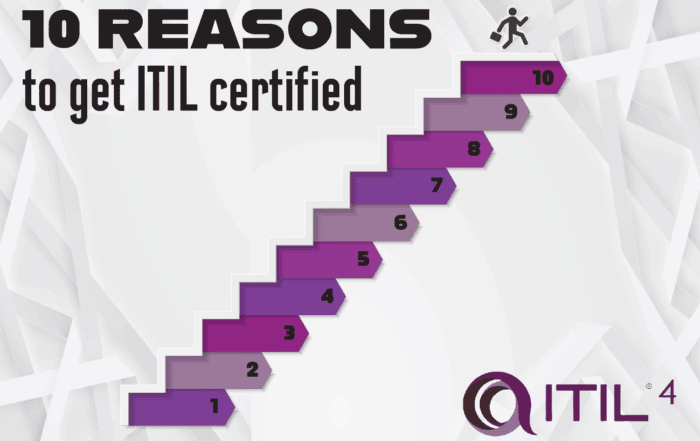
10 Reasons You Should Get ITIL Certified
By Lisa Schwartz, CEO ITSM Academy Published: August 21, 2025 Whether you’re just starting out in IT or you're looking to advance your career and make a bigger impact in your organization, ITIL certification [...]