


02/26/2024
Share This Story, Choose Your Platform!

What To Know About DevOps Monitoring Tools
The software development industry is fast-paced, and it’s crucial for organizations to adopt DevOps practices to deliver high-quality applications efficiently. DevOps emphasizes automation, collaboration, and monitoring throughout the software development lifecycle. At the core of DevOps lies the concept of continuous integration and continuous delivery (CI/CD). Monitoring is essential to ensure the health, performance, and reliability of applications in production environments. DevOps teams can leverage advanced monitoring tools to gain valuable insights into their systems, identify issues proactively, and optimize performance.
The Importance of Monitoring in DevOps
Monitoring plays a vital role in the DevOps philosophy as it offers real-time visibility into various aspects of an application’s infrastructure and performance. DevOps teams continuously monitor essential metrics such as response times, error rates, resource utilization, and system health indicators to detect potential issues at the earliest stage and take proactive measures to prevent them from affecting end users. Monitoring also aids in tracking the impact of code changes or infrastructure updates on system behavior, allowing teams to make data-driven decisions.
Enhancing Visibility with Monitoring Tools
DevOps monitoring tools are powerful resources that allow you to gather and visualize data from different parts of a system. All this data is collected in a central location and displayed in comprehensive dashboards in real time. This real-time data helps team members monitor system performance quickly and easily.
These monitoring tools can aggregate data from various sources, such as servers, databases, containers, and applications, providing you with a holistic view of your complex environment. This comprehensive view helps you quickly identify bottlenecks or inefficiencies that may be hindering your overall system performance.
Improving Performance through Monitoring
Effective monitoring is essential for identifying issues and improving system performance. DevOps teams can proactively address potential problems by setting up alerts based on predefined thresholds or patterns. With monitoring tools, teams can analyze trends over time and identify recurring issues that require long-term optimization efforts. Moreover, correlating different metrics across various components allows for a deeper understanding of how changes impact overall system performance.
Ensuring Reliability with Monitoring Tools
Ensuring the reliability of modern software systems is crucial because downtime can have severe consequences for businesses. DevOps monitoring tools help proactively detect faults by continuously monitoring system health indicators and alerting team members when specific conditions are met. Real-time alerting mechanisms reduce mean time to resolution (MTTR) by promptly notifying relevant stakeholders about incidents or abnormalities that require immediate attention.
By implementing strong monitoring practices within their CI/CD pipelines, DevOps teams can maintain service reliability standards while fostering a culture of accountability and continuous improvement.
Container-specific Monitoring Tools
Overview: Containerization has become a fundamental aspect of modern software development, with tools like Docker revolutionizing how applications are deployed and managed. However, as the number of containers within an environment grows, so does the complexity of monitoring them. Container-specific monitoring tools address this challenge by providing visibility into container resource usage, performance metrics, and overall health.
Importance: Monitoring containerized environments is crucial for ensuring the optimal performance and stability of applications running within them. Without effective monitoring tools in place, DevOps teams may struggle to identify issues such as resource contention, network bottlenecks, or application failures that can impact user experience and business operations.
Docker Stats: Docker Stats is a built-in command-line tool that provides real-time insights into CPU, memory, and network usage for individual containers. DevOps teams can use Docker Stats to quickly assess the resource consumption patterns of their containers and make informed decisions about scaling or optimization strategies.
cAdvisor (Container Advisor): cAdvisor is an open-source container monitoring tool developed by Google that collects, aggregates, processes, and exports information about running containers. With cAdvisor, DevOps teams can gain detailed visibility into container-level performance metrics such as CPU usage, memory utilization, filesystem activity, and network statistics.
Challenges: Despite the benefits offered by container-specific monitoring tools like Docker Stats and cAdvisor, challenges are associated with effectively managing large-scale container deployments. These challenges include data overload from numerous containers generating metrics simultaneously, ensuring secure access to monitoring data across distributed environments and correlating performance metrics with application behavior for root cause analysis.
Infrastructure Monitoring Tools
Infrastructure monitoring tools are essential for DevOps practices. They allow teams to continuously monitor the health and performance of network devices such as routers and servers, as well as the servers within their IT infrastructure. These tools offer real-time insights into system availability, performance metrics, and potential issues that could affect service delivery.
Prometheus
Prometheus is an Open-Source Monitoring and Alerting Toolkit
Prometheus is a popular open-source monitoring and alerting toolkit widely used in the DevOps community to monitor systems and services. Developed by SoundCloud, Prometheus is designed to collect time-series data, allowing for real-time monitoring and alerting based on predefined thresholds. One of the key advantages of Prometheus is its ability to gather metrics from various sources, making it a versatile tool for monitoring complex environments.
Multi-Dimensional Data Model and Powerful Query Language (PromQL)
One of the standout features of Prometheus is its multi-dimensional data model, which enables users to store time-series data in a flexible format. This allows for efficient querying and analysis of metrics based on different dimensions, such as labels or timestamps.
Additionally, Prometheus comes equipped with PromQL, a powerful query language that enables users to perform advanced queries on their data. With PromQL, users can filter, aggregate, and manipulate metrics to gain insights into system performance.
Grafana
Introduction to Grafana as a Visualization Tool Commonly Used with Prometheus
Grafana is a leading visualization tool that works seamlessly with Prometheus to create interactive and visually appealing dashboards. With Grafana, DevOps teams can design customized dashboards that provide real-time insights into their infrastructure’s performance metrics. Grafana’s integration with Prometheus makes it an ideal choice for organizations looking to visualize their monitoring data intuitively.
Key Features Like Customizable Dashboards, Plugins, and Alerting Capabilities
Grafana offers many features that enhance DevOps teams’ monitoring experience. Its customizable dashboards allow users to create personalized visualizations tailored to their specific needs.
Moreover, Grafana supports plugins that extend its functionality by integrating with other tools and services. Additionally, Grafana provides robust alerting capabilities that enable proactive identification of issues based on defined thresholds or conditions.
ELK Stack (Elasticsearch, Logstash, Kibana)
Explanation of ELK Stack’s Role in Log Management and Analysis for DevOps Teams
The ELK Stack consists of three core components: Elasticsearch for storage and search capabilities, Logstash for log collection and parsing, and Kibana for data visualization. Together, these tools form a powerful platform for log management and analysis in DevOps environments. Elasticsearch indexes log data efficiently, while Logstash processes incoming logs from various sources before visualizing them through Kibana.
Benefits Such as Centralized Logging, Real-Time Visualization, and Search Capabilities
One of the primary benefits of using the ELK Stack is centralized logging, which allows DevOps teams to aggregate logs from multiple systems into a single location for easy access and analysis. Real-time visualization provided by Kibana enables quick insights into log data trends, while Elasticsearch’s search capabilities facilitate efficient querying based on specific criteria. Container-specific Monitoring Tools
Overview of Docker Stats and cAdvisor
In the realm of DevOps monitoring, container-specific tools play a crucial role in ensuring the efficient performance and resource utilization of containerized environments. Two prominent tools in this category are Docker Stats and cAdvisor. Docker Stats provides real-time insights into key metrics such as CPU usage, memory consumption, and network activity for individual containers.
This enables DevOps teams to identify potential bottlenecks or inefficiencies within their containerized applications. On the other hand, cAdvisor (Container Advisor) offers a comprehensive view of resource usage trends across all containers running on a host machine, allowing for proactive performance optimization and capacity planning.
The Importance of Tracking Container Resource Usage and Performance Metrics
Monitoring container resource usage and performance metrics is essential for maintaining the stability and scalability of modern microservices architectures. DevOps teams can detect anomalies or spikes that may indicate underlying issues affecting application performance by closely monitoring metrics like CPU utilization, memory allocation, disk I/O operations, and network traffic within containers. Furthermore, tracking these metrics over time provides valuable insights for capacity planning, scaling resources based on demand fluctuations, and optimizing costs in cloud environments where resources are billed based on usage.
Infrastructure Monitoring Tools
Discussion on Nagios and Zabbix
When it comes to monitoring network devices and servers in a DevOps environment, infrastructure monitoring tools like Nagios and Zabbix are widely used for their robust capabilities. Nagios stands out for its ability to comprehensively monitor entire IT infrastructures through customizable checks for service availability, network connectivity, and system health. On the other hand, Zabbix offers advanced features such as distributed monitoring setups, automated discovery of network devices, and flexible alerting mechanisms based on predefined thresholds or conditions.
Features: Alerting, Event Handling & Capacity Planning
Alerting is a critical feature offered by infrastructure monitoring tools like Nagios and Zabbix to promptly notify DevOps teams about potential issues or failures within their IT environments. By configuring alerts based on specific triggers or thresholds defined for various metrics (e.g., CPU load exceeding 90%), organizations can proactively address incidents before they escalate into downtime or service disruptions.
Deep Dive into Lesser-Known DevOps Monitoring Tools
Jaeger
Jaeger is a cutting-edge open-source distributed tracing system that has gained traction in the DevOps community for its ability to monitor and troubleshoot complex microservices architectures effectively. With Jaeger, developers can visualize and trace the flow of requests through their systems, providing valuable insights into latency, errors, and dependencies between services. By capturing detailed timing information across distributed systems, Jaeger empowers teams to identify performance bottlenecks and optimize the overall user experience.
Description of Jaeger
Jaeger follows a model similar to Google’s Dapper and Uber’s Zipkin tracing systems but offers enhanced scalability and flexibility. It employs a lightweight “sidecar” architecture that integrates seamlessly with various programming languages and frameworks commonly used in microservices environments. Jaeger captures trace data from applications in real time, allowing for comprehensive end-to-end visibility into request processing across multiple services.
Benefits of Jaeger
One of the primary benefits of using Jaeger is its ability to provide end-to-end transaction monitoring, enabling developers to pinpoint performance issues quickly and improve system reliability. Additionally, Jaeger offers powerful analytical capabilities, such as root cause analysis and service dependency graphs, which aid in troubleshooting complex distributed systems. By leveraging distributed tracing with Jaeger, organizations can enhance their understanding of system behavior and streamline the debugging process for faster resolution of issues.
Conclusion: DevOps Monitoring Tools
In conclusion, effective DevOps monitoring tools are vital for delivering high-quality applications. The landscape offers diverse solutions, from container-specific tools like Docker Stats and cAdvisor to infrastructure monitoring tools such as Prometheus, Grafana, Nagios, and Zabbix.
To delve deeper into the world of DevOps and gain practical expertise, consider exploring Max Technical Training courses. Max Technical Training offers a comprehensive platform to elevate your skills, stay ahead in the fast-paced industry, and contribute significantly to the success of your organization. Embark on your journey of continuous learning and mastery in DevOps with Max Technical Training. Learn more and enrich your understanding of DevOps practices to make a lasting impact on your career and organizational success.
Read More Articles From MaxTrain Technical Training

Selecting the right AI instructors
Resource Article · AI Training Selecting the right AI instructors How MAX Technical Training vets its instructors — and why that process changes everything about your learning experience. There has never been more AI [...]
New ITIL5 Explained for Certified Professionals
The new ITIL builds on everything professionals already value in ITIL, evolving the framework to reflect today’s digital, product-centric, and AI-enabled reality. Existing knowledge, experience, and certifications remain fully relevant as part of this evolution. [...]

Microsoft Copilot Prompt Guide
Unlocking Productivity with Copilot: A Prompt Library for Microsoft Tools As organizations begin to explore the transformative potential of Microsoft Copilot, one thing becomes clear: the quality of your prompts directly impacts the value you [...]

A Practical Guide to Implementing Microsoft Copilot in Your Organization
A Practical Guide to Implementing Microsoft Copilot in Your Organization Date: October 14, 2025 Author: Dustin Miller Microsoft Copilot is transforming how organizations work—but unlocking its full potential requires more than just turning it on. [...]

The Power of Copilot | Boost Productivity with AI
The Power of Copilot Date: October 8, 2025 Author: Dustin Miller 1. What Can Copilot Actually Do for You? Summary: Many professionals and organizations hear about AI tools like Copilot but aren't sure what they [...]
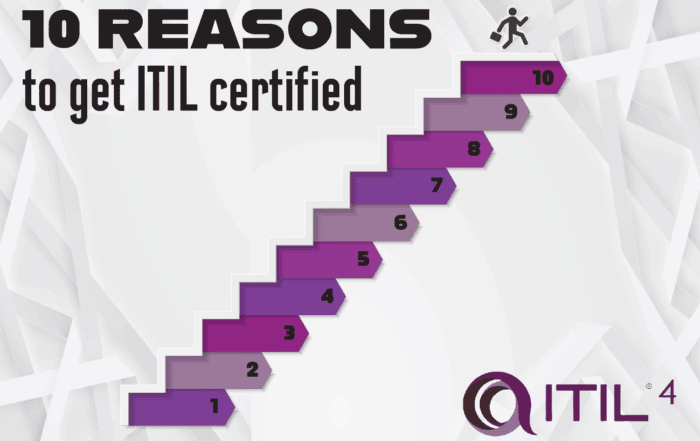
10 Reasons You Should Get ITIL Certified
By Lisa Schwartz, CEO ITSM Academy Published: August 21, 2025 Whether you’re just starting out in IT or you're looking to advance your career and make a bigger impact in your organization, ITIL certification [...]