



05/07/2024
Share This Story, Choose Your Platform!

How does AI answer questions?
Artificial Intelligence (AI) has revolutionized the way we interact with technology, particularly in the realm of question-answering. With advancements in natural language processing and machine learning, AI systems have become increasingly capable of comprehending and responding to human queries. Understanding how AI answers questions involves delving into its underlying mechanisms and processes.
At its core, AI answers questions by relying on algorithms that enable it to analyze and interpret human language patterns. These algorithms are designed to process large volumes of textual data, extract relevant information, and generate accurate responses.
How Does AI Answer Questions: Stages
- One common approach is using machine learning models, such as deep neural networks, which are trained on massive datasets to learn patterns and associations between words or phrases. When a user poses a question to an AI system, it first goes through a process called natural language understanding (NLU). During this stage, the system breaks down the input text into meaningful components like nouns, verbs, or entities. It then uses this parsed information to identify the intent behind the question by comparing it with known patterns or templates.
- Once the intent is recognized, the AI system moves on to retrieval or inference techniques to find relevant information that can address the query effectively. This may involve searching through vast databases or knowledge repositories in order to retrieve documents or facts related to the topic at hand. In some cases, AI websites that answer questions utilize pre-existing knowledge bases like Wikipedia or other curated sources.
- After gathering relevant information from various sources, AI systems employ natural language generation (NLG) techniques to form coherent and contextually appropriate responses.
NLG algorithms take into account factors such as grammar rules and linguistic conventions while generating outputs that mimic human-like speech patterns. AI answers questions by employing sophisticated algorithms for natural language understanding and generation.
It leverages machine learning models trained on extensive datasets to comprehend user queries and retrieve pertinent information from diverse sources. Through these processes, an AI website that answers questions can provide accurate and helpful responses to a wide range of inquiries.

What is AI?
Artificial Intelligence, commonly known as AI, is a branch of computer science that focuses on the development and implementation of intelligent machines capable of performing tasks that would typically require human intelligence. These machines are designed to analyze complex data, learn from patterns, and make informed decisions or predictions based on the available information.
AI systems are built upon algorithms that enable them to process and interpret vast amounts of data quickly. These algorithms enable AI systems to recognize patterns, derive insights, and generate meaningful responses.
By leveraging various techniques such as machine learning, natural language processing, and deep learning, AI can understand human language and context more effectively. The development of AI has paved the way for numerous applications across various industries.
AI has become an integral part of our daily lives, from self-driving cars to virtual assistants like Siri or Alexa. In recent years, there has been significant progress in creating AI models that excel at answering questions accurately by analyzing massive datasets.
For example, OpenAI’s GPT-3 (Generative Pre-trained Transformer 3) model is a state-of-the-art language model that can answer questions with remarkable precision and coherence. This showcases the potential power of AI in providing accurate answers to a wide range of queries across different domains.
When it comes to interacting with an AI system or website that answers questions, users can input their queries in natural language form. The system then processes these inputs using its underlying algorithms and models to generate appropriate responses.
However, it is important for users to note that while advanced AI models have made significant strides in understanding contextual nuances within queries and providing relevant answers accurately most of the time, they may not always be infallible. Users must also be mindful about asking clear and specific questions for optimal results.

What Are Some Things to Ask AI?
One of the fascinating aspects of AI is its ability to provide answers to a wide range of questions. The vast pool of knowledge and algorithms that AI possesses allows it to tackle various queries, making it an invaluable resource for users seeking information.
When interacting with an AI website that answers questions, there are numerous topics you can explore.
Historical Events and Facts
Firstly, AI can provide insights into historical events and facts.
Users can ask about significant events from various time periods and gain detailed accounts or summaries.
For instance, one might ask an AI website about the causes and consequences of World War II or the life achievements of prominent figures like Albert Einstein or Marie Curie.
The ability to access concise yet comprehensive explanations enable users to quickly grasp essential details without wading through extensive research materials.
Current Affairs
Secondly, AI is good at providing up-to-date information on current affairs and news-related inquiries. Users can rely on an AI website to gather real-time data on topics such as politics, sports, entertainment, or financial markets. Whether it’s staying informed about global events or tracking the performance of their favorite sports teams, individuals can pose questions related to recent developments and receive accurate responses promptly.
Science Related Questions
Furthermore, AI’s capacity for scientific knowledge makes it an excellent resource for questions in fields such as chemistry, biology, astronomy, and physics. Users interested in these subjects can seek explanations regarding scientific theories or concepts they wish to understand better.
This could involve querying an AI website about fundamental principles like the laws of thermodynamics or delving into more specific topics like quantum mechanics or genetic engineering. There is a vast array of things one can ask an AI when engaging with a question-answering platform.
From historical facts to current events – the possibilities are virtually unlimited; however, to get the most out of AI, it is important to learn how to use AI prompts effectively.

What Is an AI Website That Answers Questions?
1. ChatGPT
Overview
ChatGPT, developed by OpenAI, stands out as a leading AI language model that uses the powerful GPT-3.5 architecture. It’s designed to understand and generate human-like text, making it adept at answering a wide range of questions. Users can interact with ChatGPT through various platforms, such as chatbots, websites, and applications.
Features
- Natural Language Understanding: ChatGPT excels in comprehending the nuances of human language, allowing for more contextually relevant responses.
- Versatility: Whether users seek information, need creative writing assistance, or engage in casual conversation, ChatGPT adapts to diverse contexts.
Use Cases
- Content Creation: Writers and creators can leverage ChatGPT to generate ideas, drafts, and even complete pieces of content.
- Learning Assistance: Students can utilize ChatGPT as a study aid to obtain explanations and clarifications on various topics.
2. Google Bard
Overview
Google Bard, a part of Google’s AI initiatives, is a question-answering website that harnesses advanced natural language processing capabilities. This platform is integrated with Google’s extensive knowledge base, providing users with accurate and up-to-date information.
Features
- Knowledge Graph Integration: Google Bard taps into Google’s Knowledge Graph, offering users a vast repository of information spanning diverse domains.
- Multimodal Responses: Google Bard supports various forms of media, such as images, videos, and charts, enriching the user experience.
Use Cases
- Quick Information Retrieval: Users can get concise and relevant answers to factual questions.
- Visual Learning: The incorporation of multimedia facilitates a more engaging and comprehensive learning experience.
3. YouChat
Overview
YouChat is an AI-driven platform that focuses on enhancing conversational experiences. It employs advanced language models to understand user queries and respond in a manner that emulates human conversation.
Features
- Conversational UX: YouChat prioritizes a natural and fluid conversational interface, making interactions more user-friendly.
- Personalization: The platform adapts its responses based on user preferences and past interactions, creating a personalized experience.
Use Cases
- Virtual Assistance: YouChat can serve as a virtual assistant, helping users with tasks, information retrieval, and day-to-day queries.
- Social Interaction: Users can engage in casual conversation, seek advice, or simply enjoy a chat with YouChat.
These examples illustrate just two instances among many AI websites that answer questions using sophisticated algorithms powered by artificial intelligence technologies. By leveraging AI, these websites offer users a seamless experience where complex queries can be transformed into valuable insights with just a few clicks.
Conclusion: How does AI answer questions?
The emergence of AI as a powerful tool for answering questions has transformed the way we seek information and knowledge. With its ability to analyze vast amounts of data, understand context, and provide accurate responses in real time, AI has become an invaluable resource in various fields.
AI’s question-answering capabilities are impressive, handling simple factual inquiries and complex questions related to various domains like finance and medical research. With advancements in natural language processing and machine learning algorithms, its potential applications are immense. It serves as a comprehensive computational knowledge engine, answering users’ queries related to different subjects.
If you’re looking to enhance your understanding of AI, Maxtrain’s AI Basics Camp 1 is the perfect solution. The course is accessible to people from all backgrounds with no prior knowledge of computer science necessary. Contact Maxtrain at 513.322.8888 or email us at customerservice@maxtrain.com.
Read More Articles From MaxTrain Technical Training

Selecting the right AI instructors
Resource Article · AI Training Selecting the right AI instructors How MAX Technical Training vets its instructors — and why that process changes everything about your learning experience. There has never been more AI [...]
New ITIL5 Explained for Certified Professionals
The new ITIL builds on everything professionals already value in ITIL, evolving the framework to reflect today’s digital, product-centric, and AI-enabled reality. Existing knowledge, experience, and certifications remain fully relevant as part of this evolution. [...]
Microsoft Copilot Prompt Guide
Unlocking Productivity with Copilot: A Prompt Library for Microsoft Tools As organizations begin to explore the transformative potential of Microsoft Copilot, one thing becomes clear: the quality of your prompts directly impacts the value you [...]

A Practical Guide to Implementing Microsoft Copilot in Your Organization
A Practical Guide to Implementing Microsoft Copilot in Your Organization Date: October 14, 2025 Author: Dustin Miller Microsoft Copilot is transforming how organizations work—but unlocking its full potential requires more than just turning it on. [...]

The Power of Copilot | Boost Productivity with AI
The Power of Copilot Date: October 8, 2025 Author: Dustin Miller 1. What Can Copilot Actually Do for You? Summary: Many professionals and organizations hear about AI tools like Copilot but aren't sure what they [...]
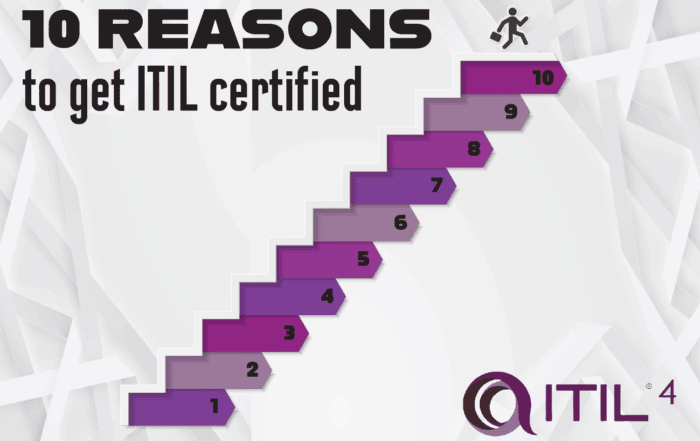
10 Reasons You Should Get ITIL Certified
By Lisa Schwartz, CEO ITSM Academy Published: August 21, 2025 Whether you’re just starting out in IT or you're looking to advance your career and make a bigger impact in your organization, ITIL certification [...]